초양자 계산 및 가치 표현
Super quantum calculation and value expression
효과적으로 무한하고 표현할 수 없는 가치를 기반으로 하는 통화가 있는 경제 시스템 설명
(효과적으로 무한하고 표현할 수 없는 가치를 기반으로 하는 통화가 있는 경제 시스템 설명)
이 시스템은 무한한 숫자를 시뮬레이션하는 초양자 컴퓨터를 통해 안정화됩니다. 이는 매우 이론적인 개념이지만, 이러한 시스템이 작동할 수 있는지 살펴보기 위해 몇 가지 핵심 요소로 나누어 분석해 볼 수 있습니다.
1. 통화의 본질
이 통화는 거의 상상할 수 없을 정도로 방대한 양으로 존재하며, 개별 단위는 본질적인 희소성을 갖지 않습니다. 하지만 가치는 희소성이 아닌 다른 요소에서 비롯되어야 합니다. 이는 양자 시스템 내의 정보 복잡성, 계산 비용 또는 동적 안정성에서 비롯될 수 있습니다.
2. 초양자 계산 및 가치 표현
이 경제 시스템은 초양자 컴퓨터가 "실질적인 무한"을 나타내는 숫자 (표준 실수를 넘어서는 초대형 기수)를 생성하는 방식으로 작동할 수 있습니다. 이 숫자는 제어된 매개변수 내에서 변동하여 중앙 은행이 법정 화폐를 관리하는 방식과 유사한 안정화 효과를 만듭니다. 거래는 이 거대한 숫자의 조각 또는 특정 표현을 참조하여 계산되므로 동적 평가가 가능합니다.
3. 안정성 메커니즘
실제 경제는 순수한 무한대를 기반으로 작동할 수 없으므로 이 무한한 기반을 유한하고 사용 가능한 가치에 매핑하는 메커니즘이 필요합니다. 한 가지 방법은 주어진 통화 단위의 지출력을 양자 시스템 내의 계산 작업에 고정하는 것입니다. 이는 암호화폐의 작업 증명과 유사하지만 훨씬 더 발전된 형태입니다. 다른 방법은 상대적 가치 지수를 사용하는 것입니다. 통화를 "사물"로 취급하는 대신, 시뮬레이션과의 상호 작용을 기반으로 가치가 할당되는 지속적인 알고리즘 프로세스로 취급합니다.
4. 경제적 기능
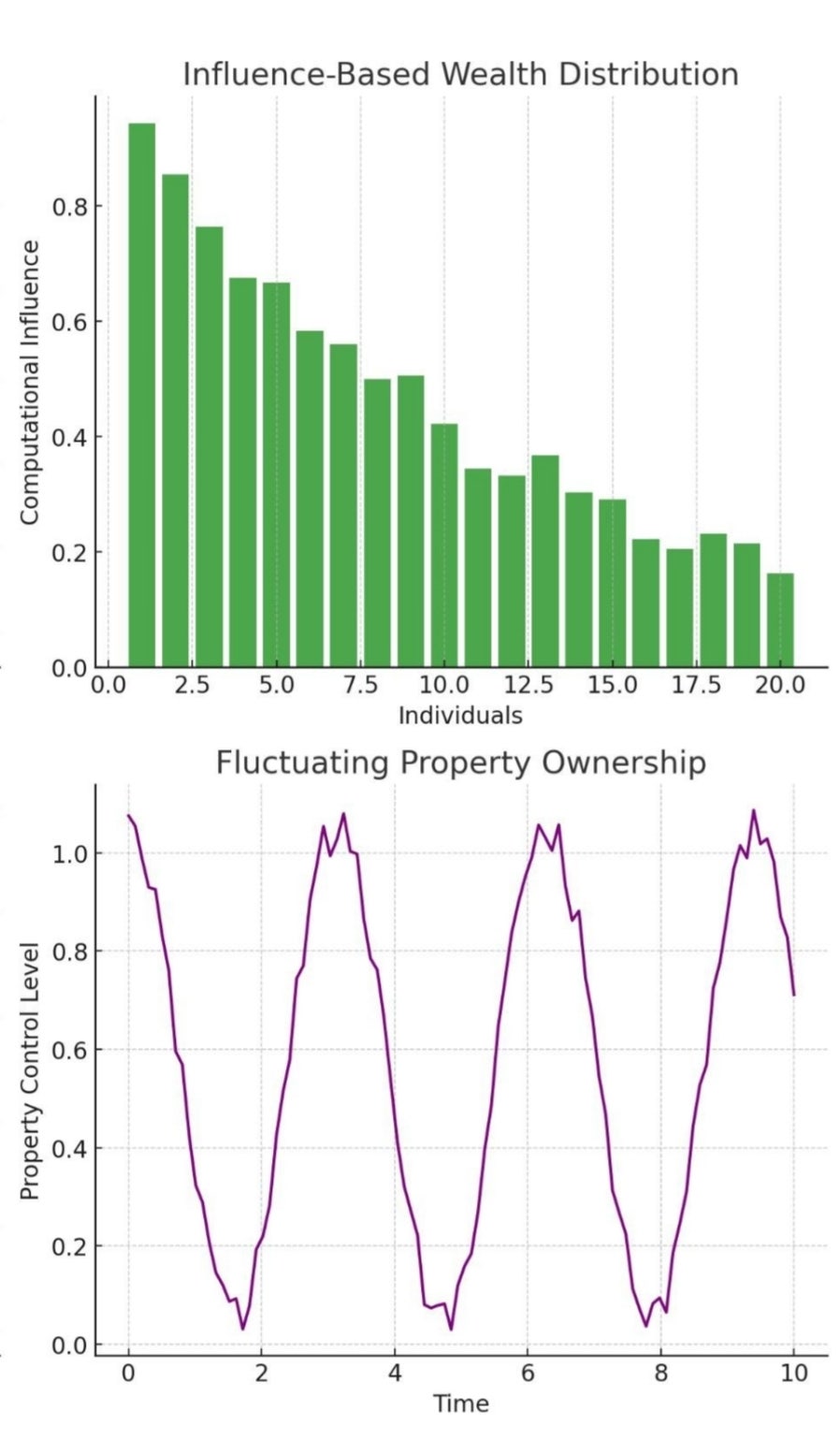
가격은 무한한 숫자의 계산 복잡성의 일부를 기반으로 동적으로 설정됩니다. 부는 소유한 통화의 총량 (의미가 없기 때문에)이 아니라 시뮬레이션에 영향을 미칠 수 있는 능력으로 측정됩니다. 이는 본질적으로 부를 정보 기반 권력 지표로 만듭니다. "통화 공급"이 무한하기 때문에 인플레이션은 존재하지 않지만, 구매력은 양자 컴퓨터가 계산 자원에 대한 접근을 허용하는 방식에 의해 규제됩니다.
5. 잠재적인 문제점
- 신뢰 및 거버넌스: 양자 컴퓨터를 누가 제어할까요? 중앙 집중식 권한은 시스템을 조작할 수 있지만, 분산형 권한은 안정성에 어려움을 겪을 수 있습니다.
- 가치 인식: 통화가 희소하지 않기 때문에 사람들은 계산적 영향을 기반으로 하는 추상적인 평가 시스템을 받아들여야 합니다.
- 거래 가능성: 관련된 숫자의 규모가 매우 크기 때문에 거래를 가능하게 하기 위해서는 이국적인 수학적 구조가 필요할 수 있습니다.
결론
이러한 유형의 경제 시스템은 작동할 수 있지만, 기존의 시장 시스템과는 다를 것입니다. 노동, 물질적 재화 또는 전통적인 수요와 공급을 기반으로 하는 대신, 정보, 계산적 영향 및 양자 상태 상호 작용에 의해 주도될 것입니다. 본질적으로 돈은 독립적인 자산이 아니라 시뮬레이션된 수학적 구조의 파생물이 될 것입니다.
이 경제 시스템을 시각적으로 표현하기 위해서는 다음을 포착하는 그래프가 필요합니다.
경제적 흐름 및 안정성: 무한한 통화가 실제 거래와 어떻게 상호 작용하는지.
영향력 기반 부: 개인이 전통적인 돈 대신 계산적 영향력을 어떻게 얻거나 잃는지.
자동화 대 제어 균형: 개인이 양자 시스템에 대해 얼마나 많은 의사 결정 권한을 갖는지.
동적 자산 소유권: 알고리즘 최적화에 따라 소유권이 어떻게 변동하는지.
Description of an economic system with a currency based on effectively infinite and indescribable values
(Explanation of an economic system with a currency based on effectively infinite and indescribable values)
The system is stabilized through a superquantum computer that simulates infinite numbers. This is a very theoretical concept, but we can break it down into some key elements to see if these systems can work.
1. Nature of currency
This currency exists in vast quantities, almost unimaginably, and individual units do not have inherent scarcity. But values must come from factors other than scarcity. This can result from information complexity, computational cost, or dynamic stability within quantum systems.
2. Calculation of superquantum and expression of value
This economic system can work in such a way that the superquantum computer generates a number (a super-large cardinal beyond the standard real number) that represents "substantial infinity". These numbers fluctuate within controlled parameters, creating a stabilization effect similar to how central banks manage fiat money. The transaction is calculated by reference to this huge number of pieces or specific representations, allowing dynamic evaluation.
3. Stability mechanism
Real economies cannot operate on the basis of pure infinity, requiring mechanisms to map this infinite basis to finite and available values. One method is to fix the spending power of a given monetary unit to computational tasks within a quantum system. It is similar to proof of work in cryptocurrency, but it is a much more advanced form. Another way is to use the relative value index. Instead of treating a currency as "things", it is treated as an ongoing algorithmic process, with values assigned based on its interaction with simulation.
4. Economic function
The price is dynamically set based on a fraction of the computational complexity of an infinite number. Wealth is measured not by the total amount of currency owned (because it is meaningless) but by the ability to influence the simulation. This essentially makes wealth an information-based power indicator. Inflation does not exist because the "money supply" is infinite, but purchasing power is regulated by the way quantum computers allow access to computational resources.
5. Potential Problems
- Trust and governance: Who controls quantum computers? While centralized authority can manipulate systems, decentralized authority can struggle with stability.
- Value recognition: Because currencies are not scarce, people must embrace an abstract assessment system based on computational impact.
- Transaction potential: Because the size of the numbers involved is very large, an exotic mathematical structure may be required to enable transactions.
Conclusion
This type of economic system can work, but it will be different from the traditional market system. Instead of being based on labor, material goods, or traditional supply and demand, it will be driven by information, computational influence, and quantum state interactions. Essentially, money will not be an independent asset, but rather a derivative of a simulated mathematical structure.
To visually represent this economic system, we need a graph that captures the following:
Economic flows and stability: How infinite currencies interact with real transactions.
Influence-based wealth: How individuals gain or lose computational influence instead of traditional money.
Automation vs. control balance: How much decision-making authority an individual has over a quantum system.
Dynamic asset ownership: How ownership fluctuates with algorithmic optimization.
Source. :
https://m.blog.naver.com/kang-elysian/223793612454
무제한 통화가치 기반 초양자 금융경제시스템
효과적으로 무한하고 표현할 수 없는 가치를 기반으로 하는 통화가 있는 경제 시스템 설명 (효과적으로 무...
blog.naver.com