베이커-캠벨-하우스도르프(BCH) 공식
BCH 공식은 두 연산자(행렬 또는 리 대수의 원소)의 지수 함수의 곱의 로그를 반복된 교환자를 포함하는 급수로 표현하는 방법을 제공합니다. 공식은 다음과 같습니다.

Z = \log(e^X e^Y) = X + Y + \frac{1}{2}[X, Y] + \frac{1}{12}[X, [X, Y]] - \frac{1}{12}[Y, [X, Y]] + \dots
여기서:
- X와 Y는 연산자(예: 행렬)입니다.
- [X, Y] = XY - YX는 X와 Y의 교환자로, 연산자의 비가환성을 나타냅니다.
- 이 급수는 고차 중첩 교환자로 계속됩니다.
BCH 공식에 대한 주요 사항:
- 비가환성: 이 공식은 양자역학(그리고 연산자가 교환되지 않는 다른 맥락)의 연산자 사이의 중요한 차이점을 강조합니다. 고전역학에서는
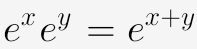
이지만, 연산자의 곱셈 순서가 중요한 연산자의 경우에는 이것이 성립하지 않습니다.
- 근사: 이 공식은 일반적으로 무한 급수입니다. 실제로는 유한 개의 항으로 잘라내어 근사치를 제공하는 경우가 많습니다. 근사의 정확도는 교환자의 크기에 따라 달라집니다.
- 리 대수: BCH 공식은 리 대수 이론과 깊이 관련되어 있습니다. 교환자는 리 대수의 기본 연산인 리 브래킷을 정의합니다.
- 응용: BCH 공식은 양자역학, 리 군 이론 및 일반적인 물리학 등 다양한 분야에서 중요한 역할을 합니다.
양자역학에서의 응용: 병진 연산자 예시
이미지는 또한 양자역학에서 BCH 공식의 응용을 보여줍니다.

\hat{T}^\dagger(a) \hat{A}(x) \hat{T}(a) = \hat{A}(x - a)
이미지의 수식 ˆT⁺(a) 는 시간 역전 연산자(Time Reversal Operator) 의 어떤 상태 a 에 대한 작용을 나타냅니다. 좀 더 자세히 설명하겠습니다.
- ˆT: ˆT는 시간 역전 연산자를 나타내는 기호입니다. 양자역학에서 시간 역전 연산자는 시스템의 시간 진행 방향을 반대로 바꾸는 연산자입니다. 즉, 시간 t 에서의 상태 |ψ(t)> 가 있다면, 시간 역전 연산자를 적용하면 시간 -t 에서의 상태 |ψ(-t)> 를 얻습니다.
- ⁺: ⁺ 기호는 에르미트 수반(Hermitian conjugate) 또는 켤레 전치(conjugate transpose) 를 의미합니다. 연산자 ˆT의 에르미트 수반은 ˆT⁺로 표시되며, ˆT의 행렬 표현이 주어졌을 때, 그 행렬의 전치 행렬의 각 원소를 복소 켤레로 바꾼 것을 의미합니다. 이것은 시간 역전 연산자가 일반적으로 반단위 연산자 (anti-unitary operator) 이기 때문에 필요한 과정입니다. 반단위 연산자는 내적을 보존하지 않기 때문에, 이러한 수반을 취함으로써 수학적 일관성을 유지합니다.
- (a): (a)는 시간 역전 연산자가 작용하는 상태 또는 파동 함수를 나타냅니다. 'a'는 특정 상태를 나타내는 변수 또는 인덱스일 수 있습니다. 예를 들어, 어떤 입자의 상태, 또는 양자 시스템의 특정 에너지 고유 상태를 나타낼 수 있습니다.
전체적으로, ˆT⁺(a) 는 시간 역전 연산자의 에르미트 수반을 상태 a에 적용한 결과를 나타냅니다. 이것은 시간 역전 변환 후의 새로운 상태를 계산하는 데 사용됩니다. 시간 역전 대칭성(T-symmetry)을 조사하거나, 시간 역전 변환 하에서 시스템의 거동을 분석하는 데 중요한 역할을 합니다. 이 연산의 결과는 상태 a의 시간 역전된 버전이며, 원래 상태와 동일하거나, 동일하지 않을 수 있습니다. 이는 시스템이 시간 역전 대칭성을 가지는지 여부에 따라 결정됩니다.
결론적으로, 이 수식은 양자역학에서 시간 역전 대칭성을 연구하는 데 사용되는 중요한 개념을 나타냅니다. 더 자세한 내용은 양자역학 교재나 관련 논문을 참조하시기 바랍니다.
이 방정식은 병진 연산자 \hat{T}(a)가 연산자 \hat{A}(x)에 작용하는 것을 설명합니다. 자세히 살펴보겠습니다.
- \hat{A}(x): 위치 x에 따라 달라지는 연산자(예: 위치 연산자 자체).
- \hat{T}(a): 연산자의 인수를 'a'만큼 이동시키는 병진 연산자. 일반적으로 운동량 연산자의 지수 함수로 표현됩니다.
- \hat{T}^\dagger(a): 병진 연산자의 에르미트 켤레(수반).
이 방정식은 병진 연산자 \hat{T}(a)로 연산자 \hat{A}(x)를 켤레 연산하면 연산자의 인수가 -a만큼 효과적으로 이동함을 보여줍니다. 병진 연산자의 표현식에 교환되지 않는 연산자의 지수 함수가 포함된 경우 특히 BCH 공식을 사용하여 이러한 유형의 결과를 도출할 수 있습니다.
양자역학과 양자물리학
"양자역학"과 "양자물리학"이라는 용어는 종종 서로 바꿔 사용되지만 미묘한 차이가 있습니다.
- 양자물리학은 원자 및 아원자 수준의 모든 물리적 측면을 포함하는 더 넓은 분야입니다. 양자역학, 양자장 이론, 양자화학 및 기타 관련 분야를 포함합니다.
- 양자역학은 미시적 시스템의 거동을 다루는 양자물리학 내의 특정 이론적 틀입니다.
종종 양자물리학의 기초적인 부분으로 간주되며 양자 현상을 이해하기 위한 수학적 도구와 원리를 제공합니다.
본질적으로 양자역학은 양자물리학의 하위 집합입니다. 연산자와 교환자를 사용하는 BCH 공식은 양자역학 내부의 기본적인 수학적 도구입니다.

The Baker-Campbell-Hausdorff (BCH) Formula
The BCH formula provides a way to express the logarithm of the product of two exponentials of operators (matrices or elements of a Lie algebra) as a series involving iterated commutators. The formula is:

Z = \log(e^X e^Y) = X + Y + \frac{1}{2}[X, Y] + \frac{1}{12}[X, [X, Y]] - \frac{1}{12}[Y, [X, Y]] + \dots
where:
- X and Y are operators (e.g., matrices).
- [X, Y] = XY - YX is the commutator of X and Y, representing the non-commutativity of the operators.
- The series continues with higher-order nested commutators.
Key Points about the BCH Formula:
- Non-commutativity: The formula highlights the crucial difference between operators in quantum mechanics (and other contexts where operators don't commute). In classical mechanics, e^x e^y = e^{x+y}, but this is not true for operators where the order of multiplication matters.
- Approximation: The formula is generally an infinite series. In practice, it is often truncated to a finite number of terms, providing an approximation. The accuracy of the approximation depends on the magnitudes of the commutators.
- Lie Algebra: The BCH formula is deeply connected to Lie algebra theory. The commutator defines the Lie bracket, a fundamental operation in Lie algebras.
- Applications: The BCH formula is crucial in various areas, including quantum mechanics, Lie group theory, and physics in general.
Application in Quantum Mechanics: Translation Operator Example
The image also shows an application of the BCH formula in quantum mechanics:
\hat{T}^\dagger(a) \hat{A}(x) \hat{T}(a) = \hat{A}(x - a)

This equation describes the action of a translation operator \hat{T}(a) on an operator \hat{A}(x). Let's break it down:
- \hat{A}(x): An operator that depends on the position x (e.g., the position operator itself).
- \hat{T}(a): The translation operator that shifts the argument of the operator by 'a'. It is typically represented as an exponential of the momentum operator.
- \hat{T}^\dagger(a): The Hermitian conjugate (adjoint) of the translation operator.
This equation shows that conjugating the operator \hat{A}(x) by the translation operator \hat{T}(a) effectively translates the operator's argument by -a. The BCH formula would be used in deriving this type of result, particularly if the expression for the translation operator involves exponentials of operators that don't commute.
Quantum Mechanics vs. Quantum Physics
The terms "Quantum Mechanics" and "Quantum Physics" are often used interchangeably, but there's a subtle difference:
- Quantum Physics is the broader field encompassing all aspects of physics at the atomic and subatomic levels. It includes quantum mechanics, quantum field theory, quantum chemistry, and other related areas.
- Quantum Mechanics is a specific theoretical framework within quantum physics that deals with the behavior of microscopic systems. It's often considered a foundational part of quantum physics, providing the mathematical tools and principles for understanding quantum phenomena.
In essence, quantum mechanics is a subset of quantum physics. The BCH formula, with its use of operators and commutators, is a fundamental mathematical tool within quantum mechanics.