Conversion of urine to high value-added biotransplantation materials
출처: Science Mission, https://sciencemission.com/urine-into-bio-implant-material
저자 정보: 명시되지 않음
기사 요약:
- 주제: 연구팀이 인간의 소변을 치과 및 골 이식, 고고학 유물 복원 등 다양한 용도로 사용되는 고부가가치 생체적합성 물질인 하이드록시아파타이트(HAp)로 전환하는 새로운 방법을 개발했습니다.
- 핵심 내용:
- 이 과정은 "오스테오이스트(osteoyeast)"라고 불리는 합성 효모 세포를 사용하여 소변을 HAp로 전환합니다.
- 이 방법은 폐수 오염 감소와 시장성 있는 재료 생산이라는 두 가지 이점을 제공합니다.
- 오스테오이스트는 포유류의 골 형성 세포인 골아세포의 자연적인 HAp 생산 과정을 모방하지만 대규모 산업 생산에 더 적합합니다.
- 이 공정은 효율적이며 하루도 채 안 되는 시간에 1리터의 소변당 1그램의 HAp를 생산합니다.
- HAp는 가볍고 기계적 강도와 생분해성이 뛰어나 다른 재료에 대한 지속 가능한 대안을 제공합니다.
- 현상: 이 기사는 생물학적으로 영감을 받은 합성 효모 시스템을 사용하여 폐수(소변)를 귀중한 생체 재료(HAp)로 전환하는 새로운 기술을 설명합니다. 이는 환경 문제를 해결하고 귀중한 상품의 새로운 원천을 제공합니다.
해설:
이 기사는 소변을 활용하여 하이드록시아파타이트(HAp)를 생산하는 혁신적인 기술을 소개합니다. 기존의 HAp 생산 방식은 환경적 영향과 비용 측면에서 문제점을 가지고 있었지만, 이 기술은 소변이라는 폐기물을 고부가가치 물질로 전환함으로써 환경 문제 해결과 경제적 이익을 동시에 달성하는 지속 가능한 해결책을 제시합니다. 합성 효모를 이용한 생물학적 방법은 기존의 화학적 방법보다 친환경적이며, 대량 생산에도 적합하다는 점이 강조됩니다. HAp의 다양한 활용 가능성을 고려했을 때, 이 기술은 의료, 건축 등 다양한 분야에 긍정적인 영향을 미칠 것으로 예상됩니다. 특히, 저개발 국가에서도 상대적으로 낮은 비용과 간편한 설비로 이 기술을 적용할 수 있다는 점은 중요한 의미를 지닙니다.
Converting urine into high-value bio-implant material
A research team has engineered a yeast platform that converts human urine from wastewater into hydroxyapatite, a high-value, biocompatible substance for use in dental and bone implants, restoration of archaeological artifacts and other applications.
In a paper published recently in Nature Communications, the researchers offer a techno-economic analysis of the technique to transform urine – which can seriously damage watersheds – into HAp, a calcium phosphate mineral projected to hold a market value of more than $3.5 billion by 2030.
“This process achieves two goals at the same time,” said a co-author. “On the one hand, it helps remove human urine from wastewater streams, mitigating environmental pollution and the buildup of unwanted nutrients; and on the other hand, it produces a material that can be commercially marketed for use in a variety of settings.”
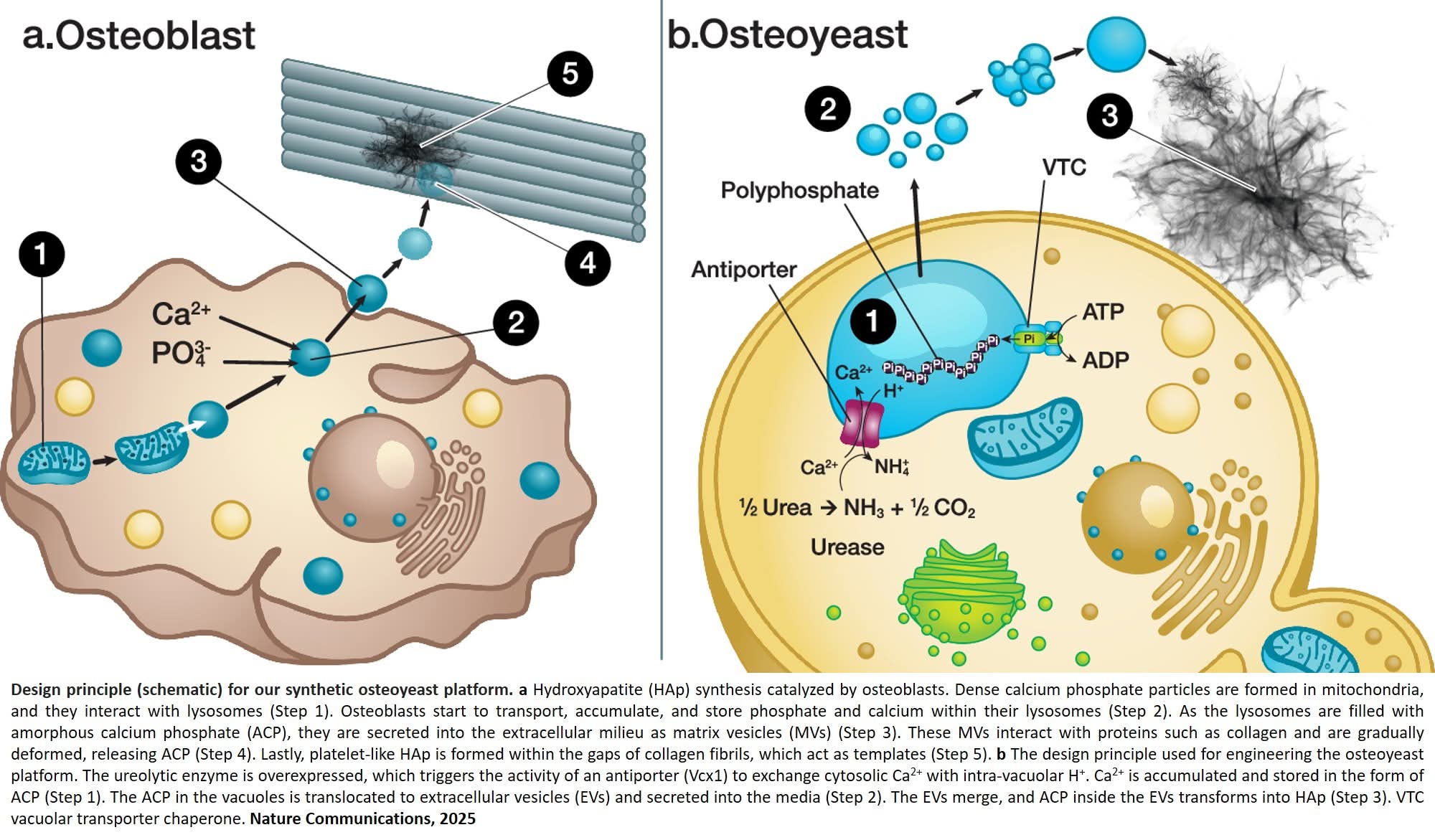
In the Nature Communications paper, the scientists discuss how they developed and evaluated a biologically inspired system based on synthetic yeast cells they dubbed “osteoyeast” that drive the urine-to-HAp conversion.
In mammals, specialized cells called osteoblasts draw calcium phosphate from body fluids that is then processed and secreted as HAp. Osteoblasts are not suitable for large-scale industrial HAp production, according to the researchers, so they turned to osteoyeast, which uses enzymes to break down urea and increase the pH of the surrounding environment. This triggers tiny cavities in the yeast to accumulate calcium and phosphate that are then secreted and crystallized into HAp.
The scientists found that their method can produce as much as 1 gram of HAp per liter of urine.
#ScienceMission #sciencenewshighlights
https://sciencemission.com/urine-into-bio-implant-material