A New Understanding of Matter
물질은 주로 단일 양자로 구성되고 고전적 (인간)
규모에서 창발적 속성을 갖는 창발적 개체입니까?
( 예, 아니오, ?)
어떤 입자가 단일 양자에 속합니까?
ChatGPT에 따르면:
물리학에서 "단일 양자"(또는 단일 양자, 단수)는 특정 에너지, 운동량 및 기타 양자 속성을 전달하는 단일하고 나눌 수 없는 양자 객체를 의미합니다. 단일 양자로 나타날 수 있는 입자에는 모든 기본 입자와 필드의 개별 양자 여기(勵起)가 포함됩니다.
다음은 간략한 개요입니다.
🔹 1. 물질 입자 (페르미온)
이들은 물질의 "구성 요소"이며 각각 단일 양자로 나타날 수 있습니다.
- 전자 (e⁻)
- 양전자 (e⁺)
- 양성자 (p⁺)
- 중성자 (n) (엄밀히 말하면 복합체이지만 원자핵에서 양자로 취급 가능)
- 중성미자 (νₑ, ν_μ, ν_τ)
- 쿼크 (u, d, s, c, b, t)
👉 예를 들어 단일 전자는 전자장의 단일 양자입니다.
🔹 2. 교환 입자 또는 장(場) 양자 (보손)
이들은 기본 힘의 양자이며, 순수한 에너지 양자이며 물질이 아닙니다.
- 광자 (γ) → 전자기장의 단일 양자
- 글루온 (g) → 강력의 단일 양자
- W⁺, W⁻, Z⁰ 보손 → 약한 상호 작용의 단일 양자
- 중력자 (가설적) → 중력장의 단일 양자
🔹 3. 기타 시스템의 양자 여기(勵起)
단일 양자는 화합물 또는 응축된 시스템에도 존재할 수 있습니다. 예:
- 포논 → 고체 진동의 단일 양자
- 마그논 → 자기 여기의 단일 양자
- 폴라리톤, 플라스몬, 엑시톤 → 결합된 장의 단일 양자
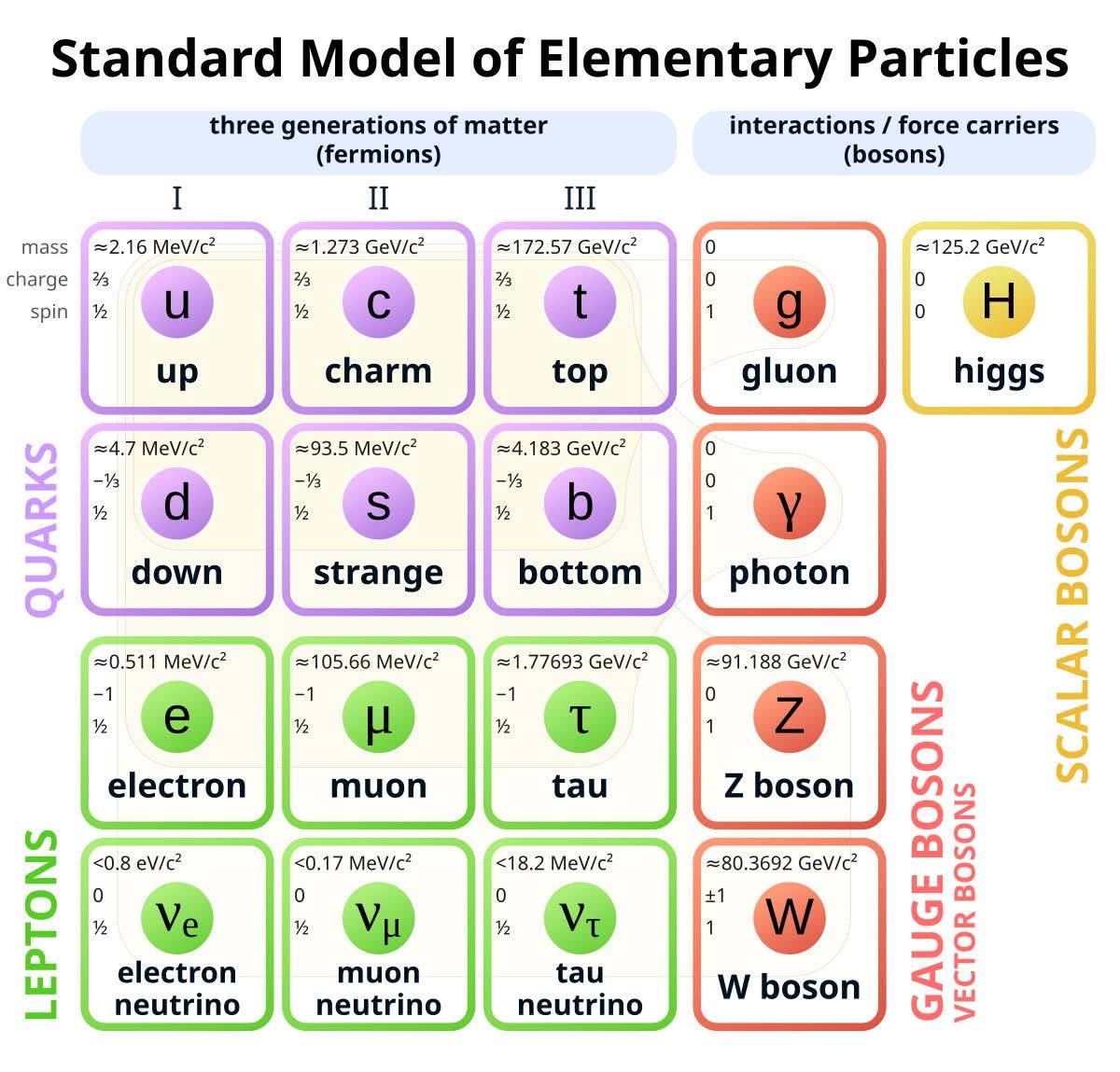
A New Understanding of Matter
Is matter an emergent entity consisting primarily of single quanta and possessing emergent properties on a classical (human) scale? Yes, no, ?
--
Which particles belong to single quanta?
According to ChatGPT:
In physics, "single quantum" (or single quantum, singular) refers to a single, indivisible quantum object that carries a specific energy, momentum, and other quantum properties. Particles that can occur as single quanta include all elementary particles and individual quantum excitations of fields.
Here's a brief overview:
🔹 1. Matter particles (fermions)
These are the "building blocks" of matter – each can appear as a single quantum:
Electron (e⁻)
Positron (e⁺)
Proton (p⁺)
Neutron (n) (strictly speaking, composite, but treatable as a quantum in the atomic nucleus)
Neutrinos (νₑ, ν_μ, ν_τ)
Quarks (u, d, s, c, b, t)
👉 A single electron, for example, is a single quantum of the electron field.
🔹 2. Exchange particles or field quanta (bosons)
These are quanta of the fundamental forces – pure energy quanta, not matter:
Photon (γ) → single quantum of the electromagnetic field
Gluons (g) → single quantum of the strong field
W⁺, W⁻, Z⁰ bosons → single quantum of the weak interaction
Graviton (hypothetical) → single quantum of the gravitational field
🔹 3. Quantum Excitations in Other Systems
Single quantums can also exist in compound or condensed systems, e.g.:
Phonons → single quantum of vibrations in solids
Magnons → single quantum of magnetic excitations
Polaritons, plasmons, excitons → single quantum of combined fields